Packaging 101

Gusseted Bags for Bulk & Irregular Products

Gusseted bags are flexible poly bags designed with expandable folds, known as gussets, on the sides or bottom of the bag. These folds allow the bag to expand and accommodate bulky, oversized or irregularly shaped products while maintaining excellent strength and product protection.

At Pyramid Packaging, we supply high-quality side-gusset and bottom-gusset poly bags in a wide range of materials, sizes and gauges for industrial, food, retail and medical packaging applications.

What Is a Gusseted Bag?

A gusseted bag is a flexible plastic bag with expandable folds, called gussets, built into the sides or bottom of the bag. These gussets allow the bag to expand when filled, providing additional capacity without significantly increasing the overall dimensions of the bag.

Compared with standard flat bags, gusseted bags offer better product presentation, improved space utilization and greater flexibility when packaging bulky or three-dimensional items.

Side-Gusset vs. Bottom-Gusset Bags

Side-Gusset Bags

Side-gusset bags expand outward from both sides, making them ideal for products with greater width or irregular shapes. They are commonly used for industrial components, hardware, textiles and food products.

Bottom-Gusset Bags

Bottom-gusset bags feature an expandable fold along the bottom, allowing the bag to stand upright when filled. These bags are frequently used for coffee, pet food, powders, grains and retail packaging where shelf presentation is important.

Gusseted Bags vs. Flat Bags

Gusseted BagsFlat Bags
Expand to fit bulky productsFixed capacity
Better for irregular shapesBest for flat products
Greater volumeLower volume
Improved shelf presentationSimpler design
Efficient use of storage spaceLimited expansion

Choosing between a gusseted bag and a flat bag depends on the shape, weight and volume of the product being packaged.

Common Applications

Gusseted bags are used across many industries, including:

  • Food packaging
  • Coffee and tea
  • Pet food
  • Hardware and fasteners
  • Industrial components
  • Medical products
  • Pharmaceutical products
  • Apparel and textiles
  • Retail packaging
  • Agricultural products

Their expandable design makes them an excellent choice whenever additional capacity is needed without increasing packaging complexity.

Custom Sizes & Gauges

Pyramid Packaging offers gusseted bags in a wide variety of custom sizes, materials and gauges to meet specific packaging requirements.

Available options include:

  • LDPE
  • LLDPE
  • HDPE
  • Polypropylene
  • Custom gauges
  • Printed bags
  • Food-grade materials
  • FDA-compliant materials
  • Bags on a roll
  • Custom dimensions

Our packaging specialists can help determine the ideal bag construction based on your product dimensions, weight and packaging equipment.


FAQ

What is a gusseted bag?

A gusseted bag is a bag with expandable folds on the sides or bottom that allow it to hold bulky or three-dimensional products.

What is the difference between side-gusset and bottom-gusset bags?

Side-gusset bags expand from the sides, while bottom-gusset bags expand from the base to provide a stable, stand-up shape when filled.

What materials are gusseted bags made from?

Most gusseted bags are manufactured from LDPE, LLDPE, HDPE or polypropylene, depending on the application and required performance.

Are gusseted bags available in custom sizes?

Yes. Gusseted bags can be manufactured in custom widths, lengths, gusset depths, materials and gauges to meet specific packaging requirements.


Why Choose Pyramid Packaging?

Since 1968, Pyramid Packaging has supplied custom flexible packaging solutions for manufacturers across North America. We work closely with customers to recommend the right bag style, material and construction for each application while helping improve packaging efficiency and product protection.

Inkjet Printing 101

Who Uses Inkjet Printing?


Virtually every company that produces products also packages them for shipment and sale. Packaging includes the cans, bottles, jars, bags and/or shrink-wrap that contain the product itself, plus the boxes, crates, barrels, and pallets that bundle quantities of product for efficient shipment. Information printing on the packaging typically falls into two categories:

  • Static message – the same for every package in a group
  • Variable – all or part of the printed message changes for each package or production run.

What is Inkjet Printing?

Inkjet printing can be defined as propelling droplets of ink onto a substrate (the product that is being printed on) in a specific pattern without touching the object’s surface. This technology allows for various substrates to be printed on. These include porous, non-porous, smooth, textured, curved, concave, and more.

There are several advantages of inkjet printing over other technologies. Inkjet printing is non-contact. This means only the ink touches the products or packaging, and the product remains undamaged and stable. Both high speed and intermittent production can be used with inkjet printing making production lines efficient and accurate.


Types of Inkjet Printing

There are three main types of inkjet technologies: dot-matrix, hi-resolution (piezo), and continuous inkjet (CIJ). Continuous inkjet technology is when there is a continuous flow of ink from a pressurized reservoir. A deflection plate and an electrical field are used to control if and where the droplets of ink reach the substrate. Where the drop lands on the substrate and how far the droplet deflects is dependent on the strength of the charge on each droplet. As a result, the deflected drops create the image and the non-charged droplets are collected and recirculated. 

Dot Matrix Inkjet Printing
Hi-Resolution (Piezo)
Continuous Inkjet (CIJ)

Dot-Matrix

Dot-Matrix (Drop-on-demand) is the other type of technology and it is when a drop of ink is only generated when a drop is needed. These drops are formed by a pressure pulse within the printhead. For instance, these codes can be seen on a number of porous and non-porous surfaces such as corrugated cases, metal, plastics, and more. 


Hi-Resolution (Piezo)

Hi-resolution, or piezo printing, is technology that generates extremely small ink droplets by variably expanding, or pulsing, a piezoelectric crystal within a jet. A piezoelectric crystal undergoes distortion when an electric field is applied and this distortion is used to create a pressure pulse in the ink chamber, which causes a drop to be ejected from the nozzle. A main advantage of piezo technology is its ability to run a wide variety of fluids. Furthermore, this ensures good reliability and a long life for the printheads.

The Squid Ink CoPilot 500 printing system uses piezo printhead technology. The CoPilot 500 utilizes piezo technology by printing great looking barcodes and logos up to 2.8’’ in height per printhead. It also has the ability to run up to two printheads. Additionally, these logos and barcodes are printed on cases that run in a production line and can be seen in stores or when they are delivered straight to you. 


Continuous Inkjet (CIJ)

CIJ is the technology of choice for small character high speed printing. A reason that CIJ is a preferred method over others is its ability to use inks based on volatile solvents which allow for rapid drying. Moreover, many of these small characters codes are on items you would see every day. Date codes printed on the bottom of beer cans, expiration dates on a milk carton, and other every-day products.

To learn more about the inkjet printing technologies that Pyramid Packaging offers, visit our product pages. Contact us today using this form, or email us at [email protected].

Shipping Trends Favor Parcels, Not Pallets (And Here’s Why That Matters)

As e-commerce continues to grow, the fulfillment process gets more complex. Shipping parcels instead of pallets can save you time, energy and money.

Manufacturers that are comfortable with palletized shipping may struggle with efficiency when dealing with individual parcels. Parcel shipping may be the key to keeping online consumers happy. However, individual product shipments create different kinds of damage risk and cost impact than traditional bulk shipments on pallets.

It’s essential for manufacturers to have optimized, efficient fulfillment plans in place now — or risk being left further behind. Whether you need to ship automotive parts, faucets, or electronics direct to consumers, if you’re looking to stay competitive and ahead of these new, e-commerce-fueled consumer trends, you may need to rethink your fulfillment strategy. That means taking a closer look at every step of the process, from package design and material selection to efficient ways for handling increased parcel volume and last-mile delivery.  

Here are four signs it’s time your fulfillment operation should be optimized for efficient parcel shipping.

1. Your Damage Rates Have IncreasedParcels can’t be treated like pallets

When manufacturers don’t evaluate their packaging processes for parcel shipments, product integrity can suffer and damage rates can skyrocket. Ultimately, no matter what you ship, there are many factors that contribute to high damage rates, including too little (or too much!) packaging material, incorrect packaging material, and inexperienced or rushed packers. 

The good news is that many of these factors are within your control. Sealed Air’s packaging engineers can test, design, and certify your packaging to meet ISTA and Amazon frustration-free packaging standards. This can help minimize or even eliminate damage.


2. Your Freight Costs are Rising

Changes in the way carriers determine freight costs (based on dimensional weight and not actual weight) mean that in order to minimize freight costs, your packaging processes and sometimes also materials need to change. 

Don’t assume the packaging solutions that work for palletized shipments or previous freight cost calculations will continue to work when your fulfillment center needs to add the ability to package individual parcels. Packaging experts can help make sure you’re using the right packaging solution — which isn’t always a box — and even test it to certify its performance.


3. Customer Feedback Is Flat — or Complaints Are Coming More Frequently

For today’s consumer, the bare minimum is an expectation that an order will arrive on time and in perfect condition. But consumer expectations are steadily growing. To remain competitive, table stakes are things like order trackability, quick delivery, a look and amount of packaging that delights the consumer, sustainable packaging materials, and easy returns. 

If your fulfillment practices and packaging materials aren’t meeting these criteria, you’re already behind. Fulfillment experts can help you speed up throughput and even custom print packaging to deliver an experience that thrills your customers.


4. Your Fulfillment Center Struggles to Keep Pace With Demand

Adding or updating your processes and equipment can be a big undertaking, but it’s likely that your operation can be optimized for parcel shipments with minimal downtime. Packaging experts can help add parcel packaging to your existing fulfillment operation with solutions that can easily integrate with your existing lines for minimal disruption — no matter your setup. Your operation may just need adjustments or reconfigurations to maximize efficiency. 

As e-commerce continues to grow, the fulfillment process gets more complex. Shipping parcels instead of pallets can save you time, energy and money.

Inkjet Printers vs Preprinted Labels

When a label is printed or placed onto a product, it must stay on for the manufacturer and customer to see. Without a legible bar code, serial number, logo, or identification number, the product could be lost or be placed where it shouldn’t be, and traceability could be a concern. In this blog, we will discuss printing directly onto the product using inkjet printing versus using a preprinted label, as well as the advantages of direct printing.


Direct package printing: what is inkjet printing?

Inkjet printing can be defined as propelling droplets of ink onto a substrate (the product printed on) in a specific pattern without touching the object’s surface. This technology allows for various substrates to be printed on – porous, non-porous, smooth, textured, curved, concave, and more.

Inkjet printing has several advantages over other technologies. Inkjet printing is non-contact, which means only the ink touches the products or packaging, and the product remains undamaged and stable. High speed and intermittent production can be used with inkjet printing making production lines efficient and accurate.


Non-direct packaging printing: what is a preprinted label?

A preprinted label is a lot like a sticker that is applied to the product or case. First, the information and graphics are printed onto the label. Next, the label is applied to the product. These labels are often hand-applied. However, if there is a larger production demand, label applicators can be purchased to apply the labels automatically.


Inkjet printers vs. preprinted labels

One of the big takeaways when comparing inkjet printers to preprinted or thermal transfer labels is the cost. Factoring in the cost of the label and thermal transfer ribbons, inkjet printing is typically a tenth of the cost of a label. The cost of manual labor is also a factor to consider when deciding between labeling or inkjet printing. If you don’t have automatic labelers, then extra time and money will have to be used to apply the labels manually.

Print direct to product
Preprinted adhesive labels

Additionally, label machines typically experience more downtime than inkjet printers. When the labeler runs out of labels or ribbons, the production line must stop for a refill. If a large quantity of product needs to go out, this may require multiple stops throughout the day.

Inkjet printers utilize ink cartridges. When an ink cartridge is depleted, the cartridge can be changed on the fly with no downtime. Squid Ink’s CoPilot Max 512i Turbo features a large 500ml snap-in cartridge. This allows users to swap ink cartridges in a matter of seconds. The generous ink volume, quick-change ink cartridge, and user-friendly touchscreen design allow users to keep their line running, reducing downtime and maximizing ROI.


Versatility at its best

Another great feature inkjet printers have is their versatility. When utilizing the system’s touchscreen controller and industrial tablet, the user can customize the message that they want to be printed. If part of the message needs to be changed, edits can occur on the production floor. This cuts downtime and allows for greater flexibility, something not available with pre-printed labels.

Overall, inkjet printers will give you a quality mark for a fraction of the price. In addition, you will have peace of mind knowing that the mark has been made directly on the product. An inkjet printer also provides a cost-effective solution for making your mark on various products and substrates.


To learn more about the inkjet printing technologies Squid Ink offers, visit our product pages and view our full selection of equipment to help you print your products. You can reach us via our Contact Us page to inquire more or email us at [email protected].

Paper Remains Top Pick for Recyclable Packaging

Rising consumer demands call for fast, easy, reliable — and recyclable — packaging. As more consumers seek ways to become environmentally responsible, paper is a good choice for companies that ship goods to boost sustainability practices. 

Our paper solutions help reduce environmental impacts before and after they’ve reached the consumer. Sealed Air brand paper packaging is made from 100% recycled content, manufactured in our paper mills that are certified by the Sustainable Forestry Initiative, and is easy for consumers to recycle. 


Implementing Responsible Practices With Paper

According to the University of Minnesota, the U.S. benchmark for water use within pulp and paper mills is approximately 17,000 gallons/ton of paper. That equates to 213 average-size bathtubs. Sealed Air has more responsible practices and operates two state-of-the-art paper facilities in Pennsylvania. Both plants are rich in paper-making history and tradition yet outfitted with the latest technological advancements. These plants produce less than 1% waste material, and our Modena facility operates one of the few completely closed-loop water systems in the country. This means all the water used to manufacture the paper is re-circulated through the mill and not discharged to a municipal wastewater treatment center. 


Paper With a Purpose

Paper is a sturdy, ecological packaging material. When used as void fill, paper is a recyclable replacement for foam packing peanuts. When used as a cushioning agent, paper can provide blocking and bracing protection similar to expanded polystyrene foam, which is not recyclable.  

Paper is stronger than you might think. Employing the engineering of Sealed Air’s systems, which crimp and create multi-ply solutions, paper has the power to protect heavy-duty products such as mechanical parts during transit. Our new, comprehensive range of paper packaging systems help you integrate sustainable solutions into your operation during critical times without incurring higher shipping costs or damage.

Pyramid Packaging offers an array of sustainable packaging solutions — but paper remains the top pick for recyclable packaging. If you’re looking to add paper to your operation, pick the most environmentally responsible packaging partner who can help you do it right and who will be there as your business grows.

Tackle Dimensional Weight by Rethinking the Box

While we haven’t moved into the futuristic territory of The Jetsons, major retailers like Walmart are starting to roll out drone deliveries across several U.S. states. Just because companies are being granted patents for drones and airborne fulfillment centers doesn’t necessarily mean the use of these delivery technologies is readily available. For the foreseeable future, trucks will be used to transport e-commerce packages to consumers’ homes. Understanding dimensional weight by rethinking the box will go a long way.

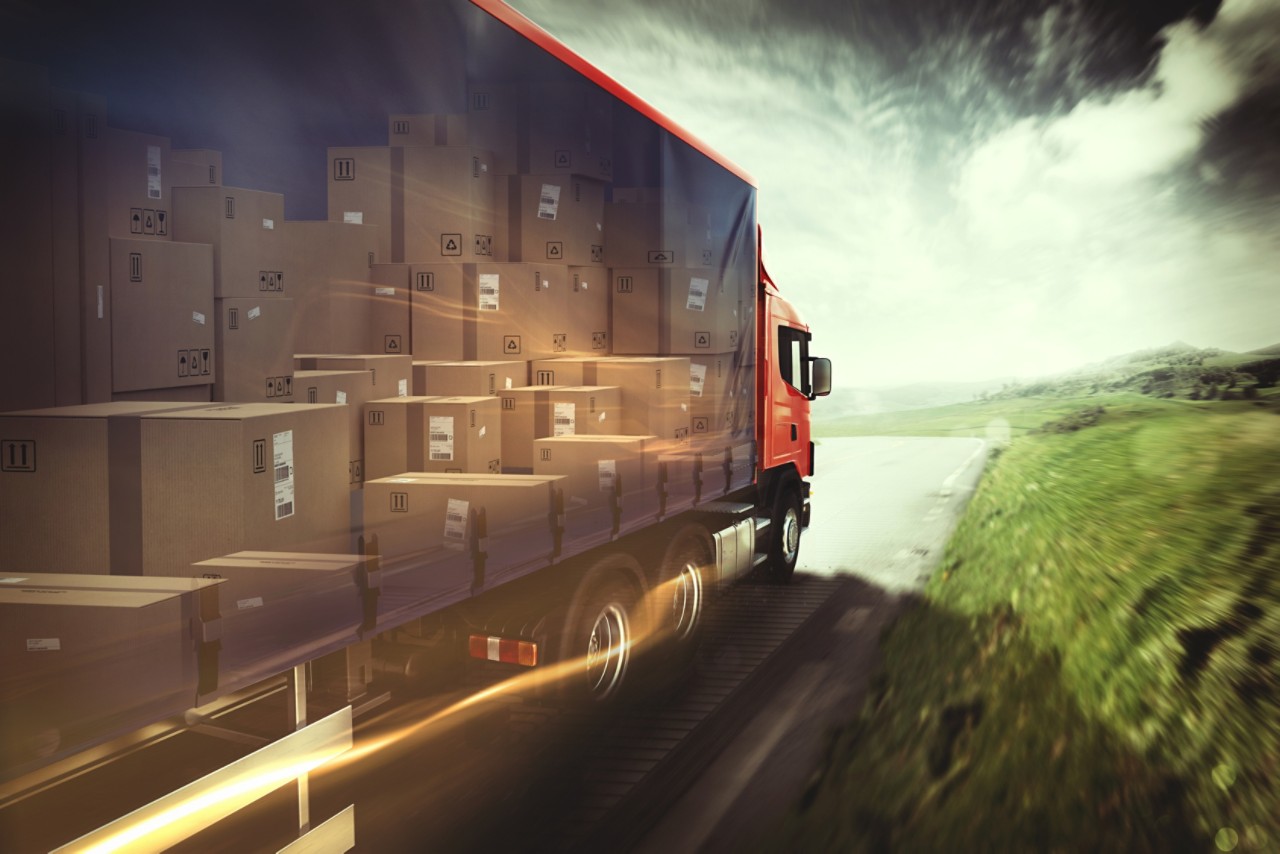
Courtesy: Sealed Air. Truck on the road with load of boxes. 3D Rendering. Dimension weight by rethinking the box.

The trouble with trucks, and a big reason why drones are under consideration, is there’s not enough space inside of trailers to keep up with the increased demand of e-commerce shipments. The trucks, however, are not going to get any bigger because larger trucks require more gas, face more regulations, and need more drivers.

This challenge has forced carriers to fit more on each truck or increase the delivery fee for each shipment. Most carriers, like FedEx, have opted for the latter and now charge for space rather than weight. Dimensional weight is a pricing technique assigned to a shipment based on volume versus the actual weight of the package.

To combat these increases in shipping fees, brands must reconsider packaging materials and delivery methods to make changes that will result in smarter, smaller parcels. Thinking about three specific variables is a good place to start.


Actions

1. Be clear about damage goals. Understand what solutions offer the best protection for your needs. Next, decide the appropriate amount of packaging material that will meet those needs while minimizing the total size of the parcel.

2. Understand throughput requirements. How many SKUs do you want to manage? You will spend more money running a slower operation than you will recover from freight savings. Be thoughtful about the packaging requirements of each SKU and how that will affect your operation.

3. Optimize the packaging operation. Retailers often overthink the process for creating shipment-ready parcels when a single packaging material can accomplish multiple jobs. The combination of resource management and operational throughput requires a delicate balance. Therefore, a little homework will go a long way to increase profits.


Further Options

These variables differ across each industry or sometimes just day to day. By asking the right questions, retailers can reach the perfect balance of a fully-optimized package with a lower operational burden. Reliable and cost-effective protection can be accomplished with some of our most popular packaging solutions.

Shipping mailers: These oldies but goodies are quick, affordable, and easy to use. Historically, only smaller, lighter items could be placed inside a mailer. However, with years of innovation and improvements, mailers can now withstand the rigors of delivery as well as traditional corrugate. They are also available in two material formats to suit your needs — paper and poly.

Durable carton wrap: This opaque film eliminates the need for a secondary corrugated box by wrapping the primary packaging to make it strong enough for solo delivery. It offers the convenience of easy-open tabs to enhance the consumer experience. Additionally, it provides tear-resistant strength to maintain parcel integrity. Plus, it’s store drop-off recyclable at thousands of locations across the U.S.

Fulfillment automation: Oversized boxes are one of the leading culprits of dimensional weight charges. Our automated cartoning systems can produce corrugate packages to fit the specific size of each shipment. As a result, our automated mailer systems use flexible film to encase products in a ready-to-ship protective parcel.


Don’t be the next company that crumbles underneath freight costs. To avoid being surprised by your next freight bill, conduct frequent operational audits to identify opportunities to reduce costs and increase efficiency. By harnessing the power of packaging and technology, you can use smaller parcels to provide superior protection all while maintaining a consistent experience.

Reach out to Pyramid Packaging today to inquire about the best way to tackle dimensional weight. You can reach out using this form, or, email us at [email protected].

Case Study: AUTOBAG 850S Mail Order Fulfillment

This customer case study example comes from one of our suppliers, Sealed Air.


Improving Operational Efficiency for Online Retailer, Fanatics

The Challenge:

Delivering to over 180 countries, Fanatics is a global supplier of sports fan merchandise including football shirts, shorts, socks, baseball caps, mugs, and other souvenirs. The online retail giant supplies consumers worldwide with official merchandise from some of sports’ biggest names. Those teams include Manchester United, Dallas Cowboys, and England Rugby. 

From its warehouse in North Manchester, an average of 7,500 packs are shipped every day to meet demand from its hugely popular website. During the holiday peak season, order volumes increase to four times the average amount. The majority of Fanatics packaging operation was handled manually. It put a strain on labor resources and can slow down order fulfillment. Packers worked at eight pack stations manually filling and sealing bags by hand. Afterwards, they then printed labels and invoices on two printers.  

Fanatics needed a bagging and printing packaging system that would optimize existing resources. Those include labor and warehouse space, and streamline its complex, high-volume e-commerce order fulfillment processes.


The Solution:

The AUTOBAG® brand 850S is a high-speed bagging and printing system uniquely designed to provide enhanced packaging productivity for mail order fulfillment and e-commerce applications. “The main reason for installing the machines was to save space while allowing us to meet some fairly ambitious growth targets,” said Andrew Crozier, Fanatics Operations Manager. 

As a result, with the help of four AUTOBAG brand high-speed bagging and printing systems, Fanatics has increased its capacity to keep pace with fulfillment demands. Additionally, the company was able to eliminate most of its manual pack stations and can now process five times the number of orders per hour with the same amount of resources. In addition to optimizing labor and warehouse space, the AUTOBAG brand 850S improves the packing process with its built-in printer that allows the label to be printed directly on the bag for better labeling of soft goods or oddly shaped items.


Results:

Due to the steps taken, here are the findings of the case study:

  • Increased efficiency and throughput velocity by 5X
  • Reduced the number of manual pack stations
  • Optimized existing labor and warehouse space
  • Ability to scale fulfillment operations to accommodate peak season and changes in demand

Evolving Automation For E-Commerce Fulfillment

To continue advancing automation for e-commerce, Sealed Air launched the AUTOBAG brand 850S paper high-speed bagging and printing system. This sustainable solution runs all-paper bags that are curbside recyclable while continuing to deliver efficiency and throughput for fulfillment operations.

Furthermore, to learn more about the AUTOBAG 850S Bagging System, click here.

Pyramid Packaging is a proud supplier of the AUTOBAG 850S. To inquire more about the machine or this case study, feel free to contact us using this link. You can also email us at [email protected].

The Benefits of Flexible Packaging

Flexible packaging options are becoming more prominent each year, as traditional methods are being replaced with more eco-friendly options in the food, pharmaceutical, and healthcare fields. Increased awareness of sustainability is fueling the growth.

The cost of producing flexible packaging is lower than standard packaging, as it takes fewer materials to produce. The more film layers are added to a package, the more secure and tamper-proof it becomes. As a result, zip locks and resealable seals are now common features on packages, such as stand-up pouch bags, which makes it convenient for the consumer for opening the product. The strong, durable film protects the package from tearing at retail stores or in the supply chain.

After it is produced, the materials can be reused and recycled. It generates less greenhouse gas emissions through its distribution than traditional packaging methods.

Other common features of flexible packaging include a lightweight product that is easy to transport and takes up less space during shipping. Flexible packaging is customizable as it can be molded into an array of shapes and sizes.

As the packaging industry continues to get more creative with flexible packaging, innovations, and advancements in packaging design, concepts and marketing plans are helping propel the movement forward.

Here are 4 reasons to switch from rigid to flexible packaging:

1. Flexible Packaging Maximizes Valuable Space

Whether you’re a food processor or food service operator, you don’t have an endless amount of space to dedicate to packaging equipment or materials. A simple way to maximize the space you have is through flexible pouch packaging for liquid food products like sauces, condiments, soups or even ground meat. Flexible packaging occupies 40% less space than metal cans, which helps optimize warehouse space and back-of-house storage. That means easier inventory management so food processors and restaurants can keep more product on hand. 

2. Flexible Packaging Reduces Costs

Food processors and restaurants can decrease their total cost of operations by switching from rigid to flexible formats. You know that flexible packaging takes up 40% less space versus metal tins – but that doesn’t only translate to increased inventory. Because it takes up less space in shipments and weighs one-tenth as much as traditional metal cans, both processors and restaurants can take advantage of significant cost savings. By investing in this format, food processors will support the process efficiency needs of their customers and maximize their own return on investment. 

Whether it’s a tin of tomato sauce or a jar of guacamole, restaurant employees spend time scraping the inside of the container, careful not to throw out valuable product. Flexible pouch packaging, on the other hand, has a structure that enables up to 20% more product yield. Less product thrown out means less money wasted. 

3. Flexible Packaging Increases Safety

In a restaurant environment, employee safety is always top of mind. Whereas the evacuation of product from number 10 cans creates a safety hazard for restaurant employees due to sharp edges on the tin and lid, it is a much safer option. Employees commonly use tin openers, knives and scissors to open a rigid container and scrape the remaining product from the bottom of the can, jar or jug – this creates both a messy kitchen and an unnecessarily dangerous situation. Flexible packaging is a much safer option, especially with options like easy-open tabs. 

Requiring tools doesn’t only impact employee safety, though. The use of scissors and knives for rigid containers also present a risk of cross-contamination. Those solutions, on the other hand, keep food safer by reducing cross-contamination and increasing durability throughout the journey.

4. Flexible Packaging Is More Sustainable

Think about what you’ve read in this article so far. Almost everything we’ve mentioned helps improve your sustainability profile – improved yield, increased food safety and space savings. Each of these benefits plays a factor in truly sustainable practices. But there’s even more to this sustainability story.

When consumers see dented cans on grocery store shelves, they avoid them. And for good reason! The same happens with food service operators – due to fear of contamination and loss of confidence in the product, restaurants frequently throw out dented tins and jugs. Because those solutions are, well… flexible, restaurants can avoid this problem and have peace of mind that their products aren’t going to waste.

Flexible packaging produces 1/10 the amount of CO2 compared to metal tins.

Flexible packaging also consumes 75% less energy and produces one-tenth of the amount of CO2 emissions compared to metal tins. Additionally, a higher product-to-package ratio means it uses less water and energy to both manufacture and transport – which results in fewer materials in a landfill.

End-of-life recovery is an important aspect of sustainability. At Sealed Air, we’ve certified many of our vertical form-fill-seal films as compatible with LDPE RIC4 recycling streams*.

From maximized space to improved sustainability, there are countless reasons to switch from rigid containers to flexible packaging. Are you convinced yet? 

Autobag 600 Wide Bagging System Case Study

For maximum productivity in wide bag and horizontal packaging applications, the Autobag 600 Wide Bagging System provides versatile packaging capabilities for not only mail order fulfillment, but of larger items, too. In this case study and application, two systems were installed to maximize productivity because of this rapidly growing business and industry. To clarify, United States Postal Service-approved mailbag sizes range from 16″ wide by 27″ long.

The Autobag 600 wide mailbag system prints and packs up to 10 bags per minute. As a result, this has reduced the number of employees from five to two, more than doubling productivity.


Annual savings: $85,160

Product shipped: Collectibles

Payback period: 11 months

Previous method: Handloading into flat bags

Previous Labor: 5 employees

Previous Cost/1000: $213

New method: Two Autobag Wide Baggers

New labor: 2 employees

New cost/100: $128


Typical applications for this bagging system include, but are not limited too: Aerospace & Defense parts, Apparel & Accessory Packaging, Automotive parts, Electronic parts, Hardware & Fasteners, Healthcare, Hobby & Craft, Household Products, Personal Products, Pet Products and Toys.

Pyramid Packaging is a proud supplier of the Autobag 600 wide bagging machine from Sealed Air. To learn more, click here to fill out a Contact Us form. You can also reach out by giving us a call at (847)-272-3400, or sending us an email at [email protected].

Autobag PS 125 OneStep Tabletop Bagger

The Autobag PS 125 OneStep tabletop bagger is a compact automated packaging system designed to improve packaging speed, consistency and productivity without requiring a large production footprint. Ideal for fulfillment centers, medical manufacturers, retail packaging and industrial applications, the Autobag PS125 combines reliable bag feeding, sealing and optional inline printing in one easy-to-use tabletop machine.

With fast setup, intuitive controls and dependable performance, the PS 125 helps reduce manual labor while improving packaging quality and operational efficiency.

Why Choose the Autobag PS 125 OneStep?

The Autobag PS 125 is designed for businesses looking to automate hand-loading operations without investing in a full-size bagging system.

Benefits include:

  • Compact tabletop footprint
  • Fast bag loading and sealing
  • No compressed air required
  • Optional integrated thermal transfer printer
  • User-friendly touchscreen controls
  • Reliable AutoBag bag feeding technology
  • Consistent package quality
  • Reduced labor costs
  • Easy changeovers
  • Ideal for low- and medium-volume production

PS 125 Specifications

SpecificationValue
MachineAutobag PS125 OneStep
SpeedUp to 15 bags/minute
Standard PS125Up to 25 bags/minute
Bag Width2″–10.5″
Bag Length4″–17″
Film Thickness1–4 mil
Electrical100–240 VAC
Compressed AirNot Required
PrintingOptional Integrated Printer
The Autobag PaceSetter PS 125 OneStep is a compact, tabletop bagger ideal for mid-volume fulfillment operations.  In this application, the built-in imprinter is used to interface with a database for printing order information, address, and barcodes directly onto the mailbag.  This semi-automatic system replaces the need for separate printing and hand-affixing labels and produces up to 15 packages per minute. The costs for materials and postage are reduced.

How the PS 125 Works

The Autobag PS125 uses pre-opened bags on a roll to automate the packaging process. Operators simply load the product into the open bag while the machine automatically indexes the next bag, seals it and prepares the following package.

The OneStep version integrates bag printing directly into the packaging cycle, eliminating secondary labeling operations while improving traceability and production efficiency.

Applications

The Autobag PS 125 OneStep is commonly used for:

  • Ecommerce fulfillment
  • Medical devices
  • Pharmaceutical products
  • Nutraceuticals
  • Hardware & fasteners
  • Automotive components
  • Electronics
  • Retail packaging
  • Consumer products
  • Replacement parts
  • Promotional kits

PS 125 vs. Manual Bagging

Compared with manual bagging, the Autobag PS125 offers significant productivity improvements.

Manual BaggingAutobag PS125
Slower packagingUp to 25 bags/min
Inconsistent sealsConsistent heat seals
Higher labor costsReduced labor requirements
Manual labelingIntegrated printing available
Variable qualityRepeatable packaging quality

Companies that automate with the PS125 often reduce labor while increasing throughput and improving package consistency.

Proven Customer Results

One Pyramid Packaging customer reduced packaging labor from ten operators to one after implementing the Autobag PS125 OneStep.

The project delivered:

  • $212,500 annual savings
  • Six-month payback period
  • Reduced shipping costs
  • Improved packaging consistency
  • Higher production throughput

For the complete implementation story, read our PS 125 Tabletop Bagger Case Study.

Why Buy Your Autobag PS125 from Pyramid Packaging?

Since 1968, Pyramid Packaging has helped manufacturers improve packaging efficiency with automated bagging systems, flexible packaging materials and expert engineering support.

Our team can help you select the right Autobag machine, bags and accessories based on your production requirements.


FAQ

What is the Autobag PS125?

The Autobag PS125 is a compact tabletop automatic bagging machine designed for hand-load packaging operations.

What’s the difference between the PS125 and PS125 OneStep?

The OneStep model includes an integrated printer that prints each bag before sealing.

How fast is the Autobag PS125?

The standard PS125 runs up to 25 bags per minute, while the OneStep model operates up to 15 bags per minute.

What industries use the PS125?

Medical, ecommerce, food, nutraceutical, industrial, automotive and retail manufacturers.

Does the PS125 require compressed air?

No. The machine operates without compressed air, simplifying installation.


Pyramid Packaging is a proud supplier of the Autobag PS-125 OneStep bagging machine from Sealed Air. To learn more, click here to fill out a Contact Us form. You can also reach out by giving us a call at (847)-272-3400, or sending us an email at [email protected].

Wide baggers for apparel fulfillment

Apparel mail-order packaging is expanding due to the growth of internet shopping. The speed of getting the package out the door after it’s been ordered is critical.  It’s also important for the mail order package to arrive without any damage. Autobag’s new Autobag 600 and Autobag 650 Wide Baggers are ideal for apparel fulfillment packaging. These bagging machines will accommodate a range of Autobag bags-on-a-roll and bags-in-a-box material up to 16 inches wide by 27 inches long.


The Autobag 650 Bagging System

The Autobag 650 is the same wide bagging system with a fully-integrated next-bag-out printer that eliminates the need for a separate labeling operation, therefore increasing speed and accuracy in mail order e-commerce, prescription-by-mail, catalog order fulfillment, and frequent changeover, variable data applications.

The Autobag 650 prints and packs at speeds up to 40 bags per minute. These wide baggers include an AutoTouch Control Screen that provides quick and easy access to job storage and recall, on-board diagnostics, and productivity monitoring. Therefore, the Autobag 600 and Autobag 650 can also be networked for full pack station integration and central monitoring. Both baggers feature an open design with fewer moving parts for longer life and ease of maintenance.


The Autobag 600 Wide Bagging System

The Autobag 600 wide bagger is a semi-automatic filling and sealing machine designed for packaging large products at speeds up to 65 bags per minute. As a result, an innovative engineering design has eliminated the need for light curtains or double palm switches, while the adjustable six-inch pass-through enables faster, more efficient cycle times, making this wide bagger ideal for many applications.

To learn about both, please visit our Bagging Systems selection today.

Pet Food Packaging

Packaging is one of the most important things for pet-industry manufacturers. Pet owners want to know that the product they are buying is sealed properly so their pet food or treats are as fresh as possible.

No one wants to buy a new 50 lb. bag of pet food only to find it has lost its freshness and nutrients. The way it is packaged is crucial to maintaining its freshness. Additionally, the type of packaging and materials used to seal the food is vital.

Dogs and cats are less likely to eat food that has lost its flavor due to poor packaging, and when pets don’t eat their food. As a result, owners will look to other brands to keep their beloved animals happy and well-fed.

Finding the right machine for the job is also crucial. One option includes the Autobag FAS SPrint Revolution SidePouch food packaging bagger which produces tamper-evident perforations and other pet-friendly packaging solutions.

This machine brings new levels of speed and versatility to demanding, high-productivity environments that require daily washdown procedures. The FAS SPrint operates at speeds up to 900 inches per minute. This state-of-the-art system offers maximum flexibility, functionality, and pet food bag packaging reliability.

The Autobag FAS Sprint Revolution Side Pouch Bagger can handle both pet food and regular human food. There are many features of this machine and it has many types of applications.

Interested in finding your unique pet industry solution? Check out our website or contact us today!

5 Signs Your Packaging Operation is Ready for Automation

1. Market Your Demand

With unemployment at its lowest rate in years (3.9% as of2018), finding, training and retaining labor is becoming increasingly difficult. As the demand for warehouse positions increases, the pool of full-time and seasonal workers continues to get smaller. Introducing automation into your packaging operation allows you to decrease your labor requirements; which reduces payroll and the recruiting strain on your HR department.

2. Your Labor Costs are Going Up

A byproduct of decreased labor availability is increased labor rates due to competitive demand. As a result, labor is typically the single biggest cost of doing business, and higher wages are having a significant impact on the bottom line. Incorporating automation into your packaging operation gives you more control over rising labor costs, and allows you to allocate existing labor to more value-added functions.

3. You’re Working Beyond Capacity

Struggling to keep up with customer demand? Launching additional products? Unable to take on larger contracts?  Then it may be time for your business to consider automation. Investing in automation can be essential to company growth, especially as ecommerce continues to grow at a rapid pace. Automating your packaging operation can increase capacity, produce more packages in less time and allow you to confidently take on new, larger contracts/orders. It’s important to evaluate your operational needs when deciding which machinery is right for your business. While investing in automation can have a significant upfront cost, it’s important to consider the payback period, total cost of ownership and the positive impact automation will have for many years to come.

4. You’ve Identified Waste in Your Production Line

Lean initiatives are an ongoing trend with many businesses, and waste is often at the top of the list. Whether it’s using too much material to produce and package your product, human error that slows production, or inefficient cycle times, when you need to run lean, automation is most likely the best method for achieving your goals. However, automating even a portion of your packaging operation can significantly increase your efficiency while reducing operating costs.

5. You Need to Improve Order Accuracy and Efficiency

As more people shop online, creating a memorable customer experience has never been more important. Positive and negative experiences are being shared immediately on social media and can have a tremendous impact on brand image and perception. Additionally, by integrating automation into a packaging operation, you’re guaranteeing consistent quality. That automation can be as simple as having a consistent seal on a bag with every order processed, so your package looks good and you reduce losses in transit. Or, automation can mean having verified checkpoints throughout the packaging process at the item, label and order level. Finally, automating your packaging operation provides peace of mind knowing that your customers are being well served.

To find out more, contact Pyramid Packaging using our form, or, email us at [email protected]

Autobag 600 Wide Bagger

Autobag has introduced the Autobag 600 and Autobag 650 Wide Bagging Systems will accommodate a range of Autobag bags-on-a-roll and bags-in-a-box material up to 16 inches wide by 27 inches long. The Autobag 600 wide is a semi-automatic filling and sealing machine designed for packaging large products at speeds up to 65 bags per minute. An innovative engineering design has eliminated the need for light curtains or double-palm switches, while the adjustable six inch pass-through enables faster, more efficient cycle times.

The Autobag 650 is the same wide bagging system with a fully-integrated next-bag-out printer that eliminates the need for a separate labeling operation, increasing speed and accuracy in mail order ecommerce, prescription-by-mail, catalog order fulfillment, and frequent changeover, variable data applications. The Autobag 650 prints and packs at speeds up to 40 bags per minute.

A straightforward, simple design with very few moving parts reduces lifetime cost and improves reliability, while on-board diagnostics and modular components simplify maintenance. When used with pre-opened genuine Autobag Bags-On-A-Roll or bags-in-a-box if applicable, and AutoLabel Thermal Transfer Ribbon, the Autobag 550 ushers in the next evolution of high-quality, reliable, and flexible bag packaging backed by the industry’s most comprehensive engineering and field service network.

Typical applications for both baggers include: aerospace & defense, apparel & accessory packaging automotive parts, electronics, hardware & fasteners, healthcare, hobby & craft, household products, personal products, pet products and toys.

Autobag 600 Wide bagger

There are numerous ways to reach out to Pyramid Packaging. You can click on this link to contact us. Next, you can email us at [email protected]. Third, you can call us at (847)-272-3400.

Packaging Explained – EZ Tear

Packaging Explained is a new series of short videos from Automated Packaging that breaks Airpouch EZ-Tear down the packaging industry. It will feature explanations on various types of packaging, steps of the manufacturing process, graphics and printing processes, and much more!

Today, we’re starting with AirPouch EZ-Tear!

AirPouch EZ-Tear can make for an important addition to your void fill lineup as it has many benefits. For instance, it makes for a great block-and-brace tactic and is easy to use.

A third-party study revealed that it takes 80% to pull and separate it than similar void fill products. As a result, it makes wrapping and packaging easier to produce and accomplish. It takes on average just 5.84 pounds of force to tear off the precise amount of pillows you need versus three of the other leading competitors.

A pre-opened slit between each component allows the operator to easily grasp and separate the materials. Once it’s separated, users can expertly fill boxes and packages knowing it will stand the toughest of journeys.

Air pouch EZ-Tear is a key part of the void fill solutions offered on the market.

Contact us today to learn more about our Inflatable Protective Packaging offerings. You can reach out to a Pyramid Packaging representative at [email protected], or contact us via our website form using this link.

Need assistance with your request for quote?

Click here to contact our sales team today!